
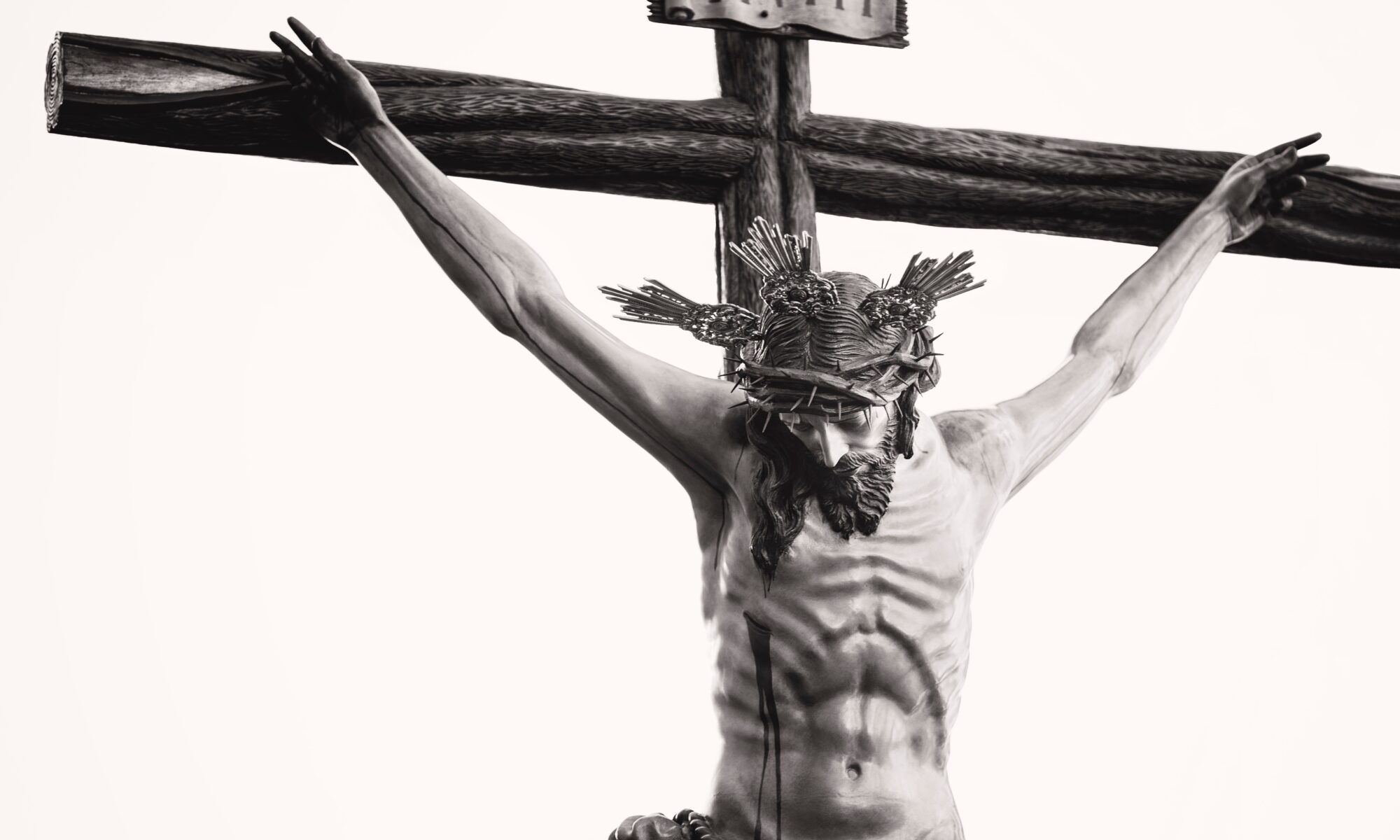
When Paul calls Christ “the firstborn from the dead” (Col. 1:18; cf. 1 Cor. 15:20; Rom. 8:29), he is saying more than that Jesus was raised first. He is telling us who Jesus is, what his resurrection means, and why it matters for the rest of us. I want to trace one thread through that claim: the resurrection as God’s vindication of the one faithful Israelite, and what that says about merit, grace, and our own obedience.
The one who lived by the Law
The Law came with a promise. Leviticus 18:5 says of God’s commandments, “he shall live by them.” Keep the Law and you will live. Paul quotes the line in Galatians 3:12 and Romans 10:5, and he also knows what Israel’s history showed: the nation as a whole did not keep it, and the Law’s curse fell on transgression (Gal. 3:10).
Then comes Jesus. Israel’s king represents the nation, so what is true of the king is true of the people in him. Jesus takes on Israel’s story and does what Israel could not. He is the one who lived by the Law. Yet he dies the death of a cursed man, hanging on a tree (Gal. 3:13).
That is the scandal. The only person in whom the promise of Leviticus 18:5 should have been fulfilled ends up under the curse. The resurrection is God’s answer. Paul says Jesus was “declared to be the Son of God in power by his resurrection from the dead” (Rom. 1:4). He was “vindicated in the Spirit” (1 Tim. 3:16). Peter says it was not possible for death to hold him (Acts 2:24).
Does God “have to”?
It is tempting to say God had to raise Jesus. I think the instinct is right but the wording needs care. God is not under compulsion, and nothing outside him binds him. Peter’s phrase “not possible” is better. It says that resurrection is the inevitable result of God’s faithfulness to his own promise, without making it a debt he owes.
This is also why the resurrection is not only about Jesus. Paul says Christ “was raised for our justification” (Rom. 4:25). The vindication of the faithful representative becomes the ground on which his people are vindicated. He is “the firstborn among many brothers” (Rom. 8:29), and a firstborn has brothers.
Who is God?
The harder question is how Jesus can merit resurrection if God is indebted to no one. The tension only appears if God is a single party standing over against Jesus, like a creditor facing a debtor. But the God who raises and the God who is raised are one God: Father, Son, and Spirit. The Son’s obedience is not a foreign offering made to a distant judge. When the Father raises the Son in the Spirit, God is not paying a wage to a third party. He is being true to himself, to the faithful love in which Father and Son have always lived.
The tradition has a useful distinction here. Merit in the strict sense, where God owes a reward the way an employer owes wages, is something no one claims. But there is merit of covenant or fittingness. God freely binds himself by promise, and a faithful response to that promise really does deserve the promised reward, because God ordered things that way. The obligation is self-imposed, an expression of his own fidelity. Philippians 2:8-9 has exactly this shape: Christ “became obedient to the point of death… therefore God has highly exalted him.” The “therefore” is real, and so is the grace. Aquinas makes the same point in the Summa: Christ’s obedience merits, and the very capacity to merit is God’s gift.
Chalcedonian Christology adds one more clarification. The Council of Chalcedon (451) taught that Christ is one person in two natures, fully divine and fully human. So the one who merits is Jesus in his humanity. The eternal Son, as God, lacks nothing. What the resurrection gives is the vindication and glorification of the human nature he took on, and that is precisely what he shares with those united to him.
Merit for the rest of us
If Christ’s merit is the faithful representative’s merit, then it is not a private transaction. It is ours by union with him. Here Anglicans and the Reformers insist, rightly, that we are justified “only for the merit of our Lord and Saviour Jesus Christ” (Article XI, from the Articles of Religion, the Church of England’s sixteenth-century statement of doctrine). Our share in his life is received by faith, not earned by repeating his obedience.
But that is not the end of the story, because the New Testament does not stop at justification. It calls us to live “worthily” of the gospel and of our calling (Eph. 4:1; Phil. 1:27; Col. 1:10). It speaks of reward without embarrassment: “God is not unjust so as to overlook your work” (Heb. 6:10). Here the same pattern of promise and response applies. God owes us nothing, yet he has freely bound himself to bless what he himself calls and enables us to do. Augustine’s line is common ground even between Rome and the Reformers: when God crowns our merits, he crowns his own gifts.
Our mixed record keeps us honest. We sin, and we must repent. Our best offerings are accepted only “in Christ,” never on their own account. That is why the Book of Common Prayer prays “not weighing our merits, but pardoning our offences.” Many Anglicans prefer the words “reward” or “acceptable” to “merit,” and the substance is the same.
It is still ours
One misunderstanding is worth heading off. If grace enables our obedience, does God do it for us? No. Paul says, “work out your own salvation with fear and trembling, for it is God who works in you, both to will and to work for his good pleasure” (Phil. 2:12-13). He does not say God works instead of you, or that you work and then God adds his share. The act is fully yours and fully enabled by God. “I worked harder than any of them,” Paul says, “though it was not I, but the grace of God that is with me” (1 Cor. 15:10). He claims the labor and redirects the credit, retracting neither.
The reason this is not a rivalry is that God is not one cause alongside others. He gives the creature its being and its power to act, so his enabling constitutes our action rather than replacing it.
The Incarnation shows the pattern. The Church settled the question of Christ’s human will at the Third Council of Constantinople (681), the Sixth Ecumenical Council, which affirmed that Christ has two wills, divine and human, united in one person and never in conflict. Aquinas, following St. John of Damascus, explains that Christ’s humanity is the instrument of his divinity, joined to the Word and moved by him (Summa Theologiae III, q. 19, a. 1). The Son does not step aside so that a Spirit-empowered man can act in his place. He acts through a human nature that really acts. Christ has a true human will (III, q. 18, a. 1), and that will freely conforms itself to the divine will without being absorbed into it (III, q. 18, a. 5). That is why Aquinas can read Gethsemane as a real human willing, “not my will, but yours” (Luke 22:42), and not as a conflict between two rival wills (III, q. 21, a. 4). Our case is not identical to his. We are persons who need healing and adoption, while his humanity is the Word’s own. But the principle holds: God’s working does not cancel human agency but establishes it. When grace works in us, the act is truly ours.
What follows
This gives us a gospel that avoids two errors. One is a pietism that treats obedience as optional because “God does it all.” The other is a moralism that treats obedience as our achievement. The faithful Israelite lived by the Law, was vindicated by the God who is true to his promises and drew his people into the life he opened. We are raised in him, and we are called to live now as those who will be. God owes nothing to anyone, and yet in Christ, obedience is truly rewarded, and for his sake, so is ours.